

Subtotal: 9 €
The cultivars of Crifo: 5 of the most important vines of Puglia
5 November 2020
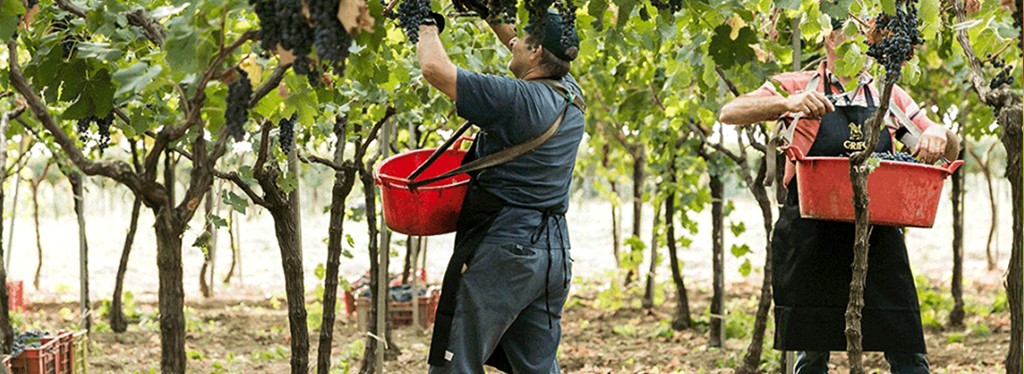
There are 5 native grape varieties cultivated and selected by the Ruvo di Puglia Winery. These include some of the most important varieties in Puglia: the cultivars Nero di Troia, Bombino Bianco, Bombino Nero, Moscatello Selvatico, Pampanuto (or Verdeca).
With these Puglian grape varieties, cultivated just a few kilometers from Castel del Monte, the Ruvo di Puglia Winery produces wines from its most renowned labels, presented in the Crifo range.
Let’s discover the characteristics of these cultivars and the unique features of the wines made from their grapes.
The Nero di Troia is the flagship grape variety of Crifo’s production: it is the third native Puglian grape variety, after Primitivo and Negramaro, in terms of cultivated hectares, boasting origins that are lost in legend and offering a single-variety wine among the most aristocratic in Puglia.
It is a native black grape variety typical of the Alta Murgia and Foggia areas, and depending on the cultivation area, it takes on different characteristics. Its berries are a very dark ruby color. It produces a wine for connoisseurs, perfect for aging, thanks in part to its natural supply of polyphenols.
In the last century, it experienced a period of great commercial success and was even exported in bottles to France. After a period of being forgotten, Nero di Troia was “rediscovered” by Puglian winemakers and is now a symbol of the region. The wine has an intense ruby red color, a finely tannic, austere, spicy taste with aromas of blackberries and licorice that evolve over time into notes of cinchona calisaya.
Bombino Bianco is another important native Puglian grape variety, characterized by low vigor but good productivity.
It prefers dry, light, siliceous, or calcareous soils, located at hill altitudes and well exposed to the sun. Due to the considerable size of the clusters, Bombino Bianco must be pruned to medium length to prevent the plants from weakening.
Vinified in purity, it produces a straw-yellow wine, with a rich and pleasant aroma and a slightly mineral taste with hints of almonds, anise, and a touch of apricot and tropical fruits.
Bombino Nero is the third native grape variety in the selection of Puglian varieties cultivated and vinified by the Winery of Ruvo di Puglia.
A black grape variety, it is known for its great vigor, productivity, and yield in must, so much so that it was once called “Buonvino”. Its berries are rather large and spheroidal, with a thick, bluish skin. The ripening is late, and the freshly picked berries tend to have high acidity and low sugar levels. It is a cultivar very suitable for rosé vinifications, to which it gives a pleasantly dry and round flavor.
It has greater sapidity and freshness compared to other rosés because the soil of the Murgia region is predominantly calcareous. Its dominant aromas recall rose, citrus, red fruits like strawberry and raspberry, and pomegranate.
Moscatello Selvatico has a vine with medium-small, orbicular, tri or pentalobate leaves, with medium-sized, conical-cylindrical clusters. The berry is medium-large, with a bright green skin and good consistency.
It is a distinctly sweet aromatic grape. The wine obtained from it is straw-yellow, with a fragrant and musky aroma. The taste is fresh, delicate, and typically aromatic. It has hints of candied orange, chamomile, renetta apple, and cotton candy, “laid” on an aromatic grassy carpet. The taste brings back citrus and delicate orange blossom. The fruity trail in the finish is rich and fresh.
The fifth grape variety in the Crifo selection is Pampanuto, also known as Verdeca.
This vine also has medium-sized, orbicular leaves. The clusters are also medium-sized and conical in shape, with medium-sized, round berries with abundant bloom on the thick skin. The color is yellow tending to green.
Verdeca stands out for its excellent yield in must, vigor, and good productivity. It is a strong grape variety, resistant to even adverse climates, and prefers clay-rich soils. It performs particularly well on hills between 200 and 400 meters.
Wines obtained in purity are light, neutral, with a pronounced acidity. Straw-yellow color with greenish reflections. Aromas of orange blossom, a hint of sage, white melon, apricot, cardamom, and toasted hazelnut. The taste is full. It reflects the aroma and ends with a prolonged fresh-sapid sensation.


